Sega Channel 
In the spirit of Genesis week, let's jump back 9 years and look at the service that should have taken the gaming industry by storm.
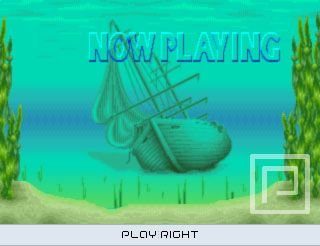
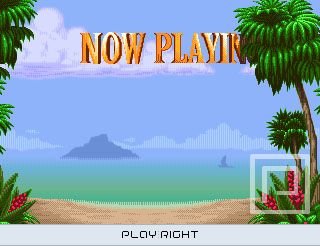
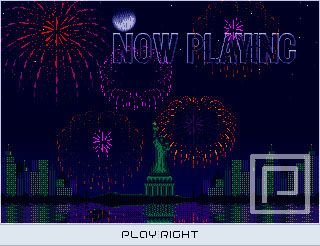
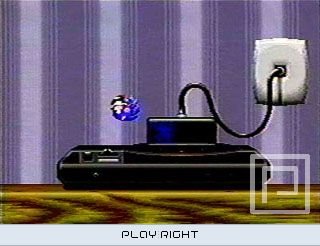
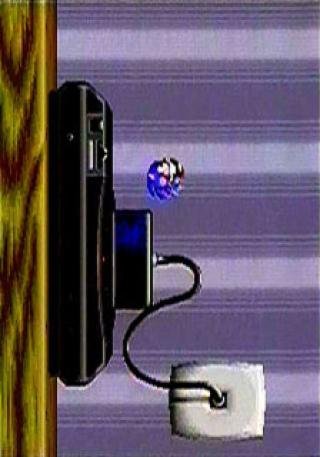
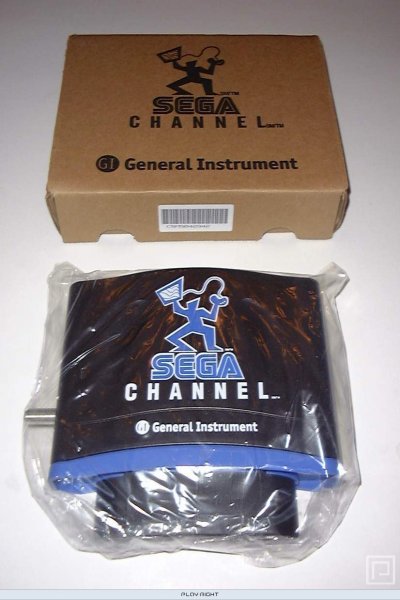
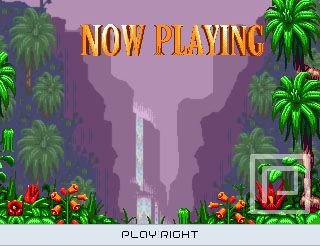
Sega has always been known as the company who was ahead of its time. Sega launched the second color handheld game machine (Game Gear), some of the first CD-ROM based console games (Sega CD), and has supplied online (whether via the Intenet or direct dial) multiplayer on every console since the Genesis' failed rollout of the XBAND modem (Ed Note: A rollout not performed by Sega directly). Back in 1994 Sega once again broke new ground with the Sega Channel, a 24 hour a day game on demand service. For about $12.95 per month (depending on your cable company) gamers got a Sega cartridge adapter to borrow and access to 50 games per month which would be downloaded to a flash card inside of the cartridge. Games did not save for "offline" play but the thrill of having a virtual video store in your house was intense. One of Sega's unique twists was the availability of prerelease (demo) versions of upcoming games only to Sega Channel subscribers. The channel also boasted exclusive Sega Channel only titles which were never released in cartridge format. However as awesome as this sounds, the Sega Channel was a failure and continuing the Sega legacy, was far ahead of its time. The Sega channel was broadcast via satellite from Denver, Colorado and the redistributed by subscribing cable companies to their end users. Sega Channel subscribers had to get a Sega Channel adapter from their cable company to use the service and pay a reasonable monthly fee. Using it was simple, just put the adapter in your Genesis, plug in the AC and the cable tv wire and turn the Genesis on. BAM , if you were a subscriber you had games on demand a technology we still don't have today. With the advent of DVD storage (and even CD media) it is likely we will never see another system like the Sega Channel. Most of today's games would take hours to download for most users and it is impractical to wait that long with rental stores nearby. In the end Sega Channel is one of those things that we can look back on as another Sega vision that didn't live up to its potential. -------------------- Sega Channel Platform: Sega Genesis (Cable) Genre: Game Depending Publisher: Sega Channel Producer: Michael Sherrock Developer: Pacific SoftScape Inc. MyPosition: Lead Artist Project Duration: 1.5 years Release Date: Fall 1996 Origin: U.S. This was a world wide project, it reached across America, up to Canada, over to England, and down to South America. This was a cable system that allowed you to download from a selection of 50+ games from your cable company. I had a unique experience on this project, I was the only artist. In the Channels creation, another programmer and I had to design and create the initial interface and the updated monthly submenus. The right is an image of the initial or "lead in" menu that never changed. To the right you will see a few samples from the many of the game catergory selection menus all of which I created. These menus and their submenus were updated each month. For those who are not familiar with the Genesis, there are two "layers" in each of the graphics to the right. Each layer is 320X224, made up of 250 8X8pixel tiles. Each layer is also only 15 colors, that is the big challenge. Now however, each of the images are 24bit for the JPG format. The top menu has the "sprites" added so you can see how the full and final effect looks in the end. The other images only contain the maps, I left out the sprites so as not to obscure the art. -------------------- EE 4984 Telecommunication Networks Project 1 SEGA CHANNEL Jeff Lazzuri and Stan Gutowski Sega Channel is the first of its kind. It is the first interactive service, that provides video games on demand 24 hours a day to its subscribers. It began in 1994 as a consortium between Sega of America, Inc., Telecommunications, Inc. (TCI) and Time Warner Entertainment Company. Overview Sega Channel will provide Sega Genesis video games directly to the homes of it's subscribers. They will have access to the following features. Approximately $12.95 /month (depending on your location) Up to 50 games a month 24 hours a day Previews of games to be released Unlimited playing time Game playing tips, video game news Sega game guide Sega Channel uses the existing compression technology in conjunction with the cable system interface to provide the users with almost instant access to their favorite games. The games are sent by the following procedures. 1. Information for the games sent via satellite 2. Special adapters with on-board memory connect the Sega Genesis to the cable signal coming in 3. The user selects which game he/she wants to play, via on-screen programming and the D-pad controller 4. The game is then downloaded to the respective Sega Genesis machine. This takes less than a minute. 5. The user can then play the game for as long as he/she likes as long as the unit is turned on. NOTE: These games play exactly like the cartridges. They are not changed in any way. Sega has also rated each game and supllied the parents with a password (4 digit pin#) if so desired. Technical Information The Sega Channel signal originates in Denver, CO. It is carried over the Galaxy-7 satellite, located 91.0 degrees W longitude using transponder 1 with horizontal polarization. It is then delivered to individual cable providers. It is currently in three major markets: Dallas, TX., Los Angeles, CA., and Atlanta GA. The uplink signal is at a carrier frequency of 1.435 GHz and occupies 8 MHz bandwidth using QPSK modulation. The downlink signal is at a frequency of 1.1 GHz and occupies 6 MHz bandwidth using QPSK. Subscriber Loop occupies two 3 MHz non-contiguous channels data rate=6 Mbps tunable to 68 different operating frequencies between 51 and 118 MHz BER is <10E-06 uses Quadrature Partial Response (QPR) modulation QPR is a modulation scheme that uses a controlled inter-symbol interference. The receiver is capable of logically decoding the signal. QPR provides 20% better bandwidth performance than QPSK with only a minor increase in signal power. The only hardware required by the customer is the Sega Channel adapter designed by Scientific Atlanta. The adapter plugs into the Sega unit like a cartridge and is connected to the existing coaxial cable TV wiring and to an auxillary power supply. The adapter can be used on any 16 bit Sega Genesis unit. This adapter allows the customer to download the game selected in less than 1 minute. The adapter contains 4 MB DRAM, which will hold a game up to 32 Mb in size. Once the game is downloaded, it responds exactly as if it were a cartridge. Below is a block diagram illustrating the uplink/downlink operations.
|
 |
 |
 |
 |

 copyright Play:Right 2002-2025